Allegiant Air - Post Travel Survey Redesign
Transforming a legacy CX survey into a scalable, user-centered digital experience serving 5M+ travelers.
Project Overview
The post-travel survey is a core feedback channel sent to every passenger after their flight. It serves as the pipeline for direct user feedback across different business groups. I led the survey overhaul, first directing the survey UX, question strategy, and logic flow to ensure insights were actionable while maintaining clean, structured data for backend business teams. The second part encompassed a complete redesign, implementing the Allegiant brand, minimal but comprehensive interfacing, and dynamic viewport considerations for mobile.
I partnered with Data Engineering, Data Science, Customer Intelligence, and CX teams to define question categorization and data storage frameworks, while the visual design overhaul was left to my discretion. This project ultimately delivered a modular, visually redesigned survey generating over 150+ unique data points per response, supporting a program scale of 5M+ travelers.
Project Outcomes and Impact
The platform was designed in Medallia, with component-based architecture allowing for modularity and the ability to inject question subsets for future use across teams. Personalized questions with category tagging has seen up to 40% faster completion rates in internal testing, with system scaling allowing for up to 3x more concurrent users. The visual redesign emphasizes modern branding, with a unified structure.
Collaborators
UI/UX: Ralph C.
CI: Blake E., Alexa S.
DE: Parmeet S.
DS: Matt M.
Timeline
Nov 2025 - Mar 2026
Tools
Figma
Medallia
T-SQL/Python
Twilio Segment (CDP)
Initial Challenges
The legacy survey suffered from a fundamental structural problem: every passenger received every question regardless of relevance. The survey was also 6 years outdated, with COVID-era questions still being asked, not to mention an outdated design. These circumstances led me to focus on 4 core challenges moving forward in the redesign.
Survey fatigue from 20+ questions asked to all respondents
No branching logic meant data collection was unfocused with high abandonment rates
Survey structure lacked adaptability and personalization to individual passenger needs (ex. call center problems, booking complaints)
Demographic data was being recollected despite already existing
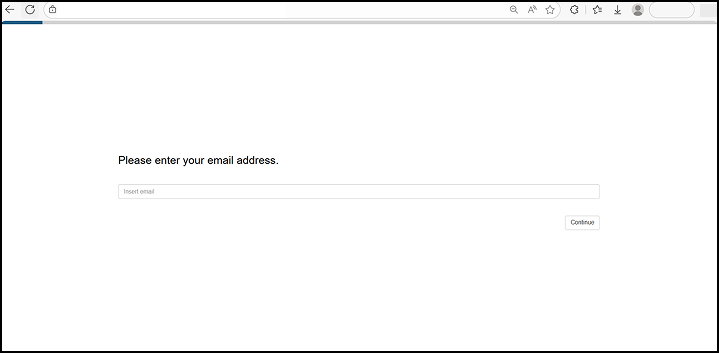
Landing page of previous post-travel survey showing a lack of personalization and branding
Abandonment Patterns & Customer Journey Mapping
To understand where the existing survey was failing, I analyzed completion data and user behavior across the survey journey. This journey extends through the survey, from initial booking to the finish button, not just the flight itself. I observed that in the old survey, leisure travelers were significantly less likely to complete surveys; the most important time for survey completion is right after the flight, so a large drop-off suggests a “mental check-out” post-flight. Also, survey exhaustion disproportionaly affected business travelers, who dropped off mid way in larger quantities than other groups. Demographic questions were skipped, peak abandonment occurred around Q7-Q8 when asking about expectations and comfort.
These observations led me to map the entire customer journey, aiming to identify which touchpoints were most important to capture feedback, what types of feedback should we expect to capture, and how we can think about survey development.
The big problem I sought to answer is: How can we gather specific insights for a survey that’s sent to everyone, regardless of sentiment?
To effectively capture key touchpoints in the customer journey, I thought to create 3 bins of question types, each designed to capture a key category while leaving room for future expansion or injecting other questions ad hoc.
Churn Predictors: Early-stage questions that identify at-risk users and determine which paths to trigger
User Experience: General sentiment analysis on customer journey, insights into various touchpoints and anchors for follow-up later in the survey
User Segmentation: Behavioral and demographic markers that, when paired with pre-existing data, allow for focused study
Customer Diversification: Three Core Bins
Survey Logic Overhaul: Before & After
The 3 question categories allowed me to easily frame the survey around a centralized, up-front focus. To counter the drop rate issue, I decided to push our most important questions first, even before demographic questions. That way we’re always collecting valuable data. These core user bins and 12 questions give us a bulk of vital data we can use for insights.
Following the core questions, we can inject Smart Questions: questions that are displayed based on many variables, such as if the traveler experienced a delay or indicated dissatisfaction in a previous survey question.
This new structure fixes many issues of the old one, including personalization, reduction of survey length to combat fatigue, and the elimination of demographic questions when we already have that data stored.
Conditional Logic & Branching Rules
Conditional Logic & Branching Rules — The three-bin question structure flows into conditional branching rules that determine survey length and content per respondent. The Churn questions act as gatekeepers to trigger pathways through the Experience and Segmentation bins. For example, high-purchase intent may emphasize the Experience section to uncover reasons behind high scores, or cancellation indicators may lead to a focus on specific touchpoints through the customer journey. Finally, the Segmentation category disregards the previous focus on demographics and instead segments customer groups based on a variety of factors, such as purpose of travel. This section can be bridged with customer demographics and other sections to highlight travel patterns for select groups, allowing follow-up ad hoc surveys to be sent out and substantiate future projects based on indicated travel preferences within these segments.
Smart Questions are conditional follow-ups that trigger based on pre-existing data, either in-house or collected via the survey. These questions are the modular focus of the survey, which can be changed at any time to reflect current business interests. The sample ones above focus on cancellation/delays, gate agent and call center reactions.
Final Designs: Survey & Email Distribution
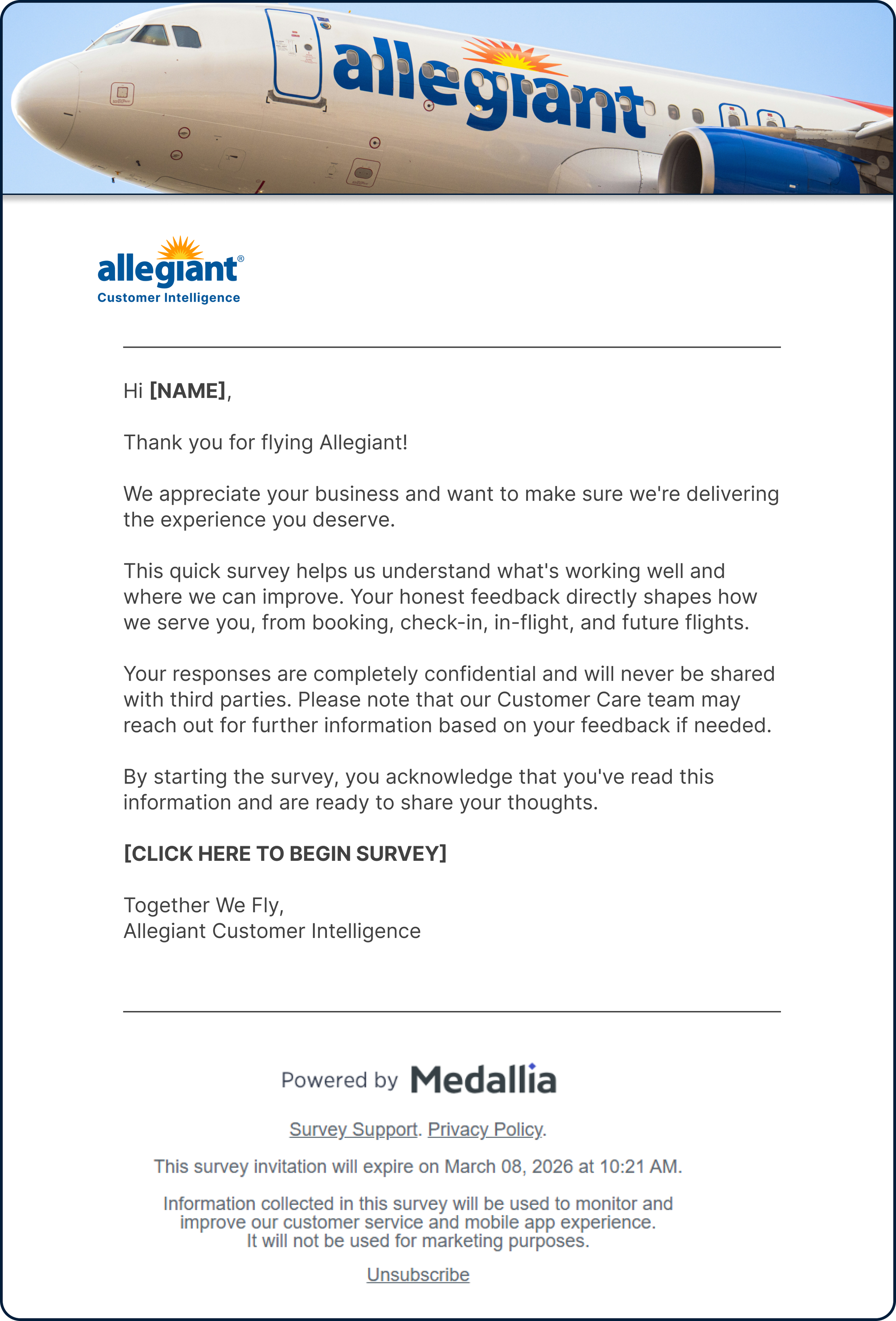
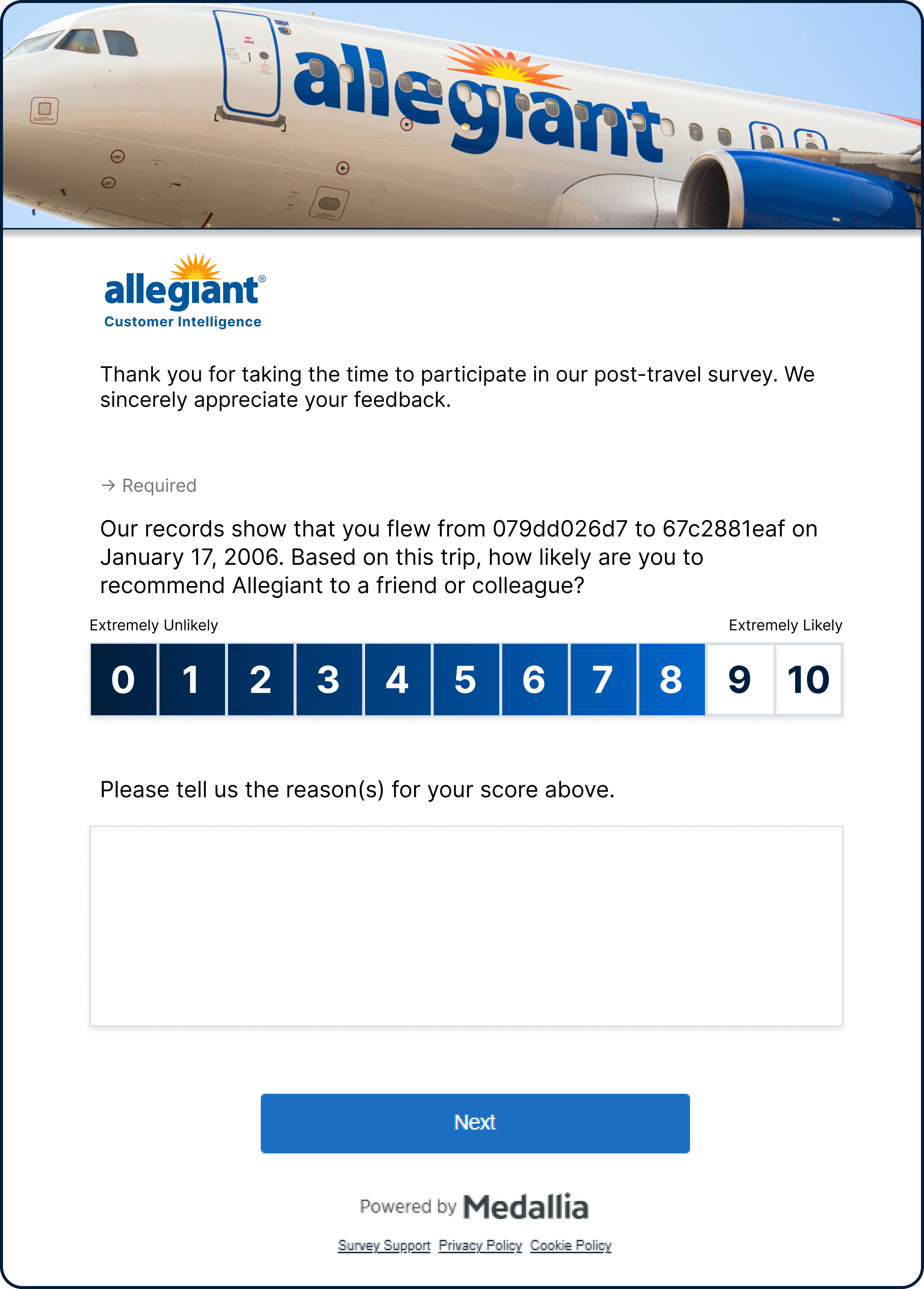
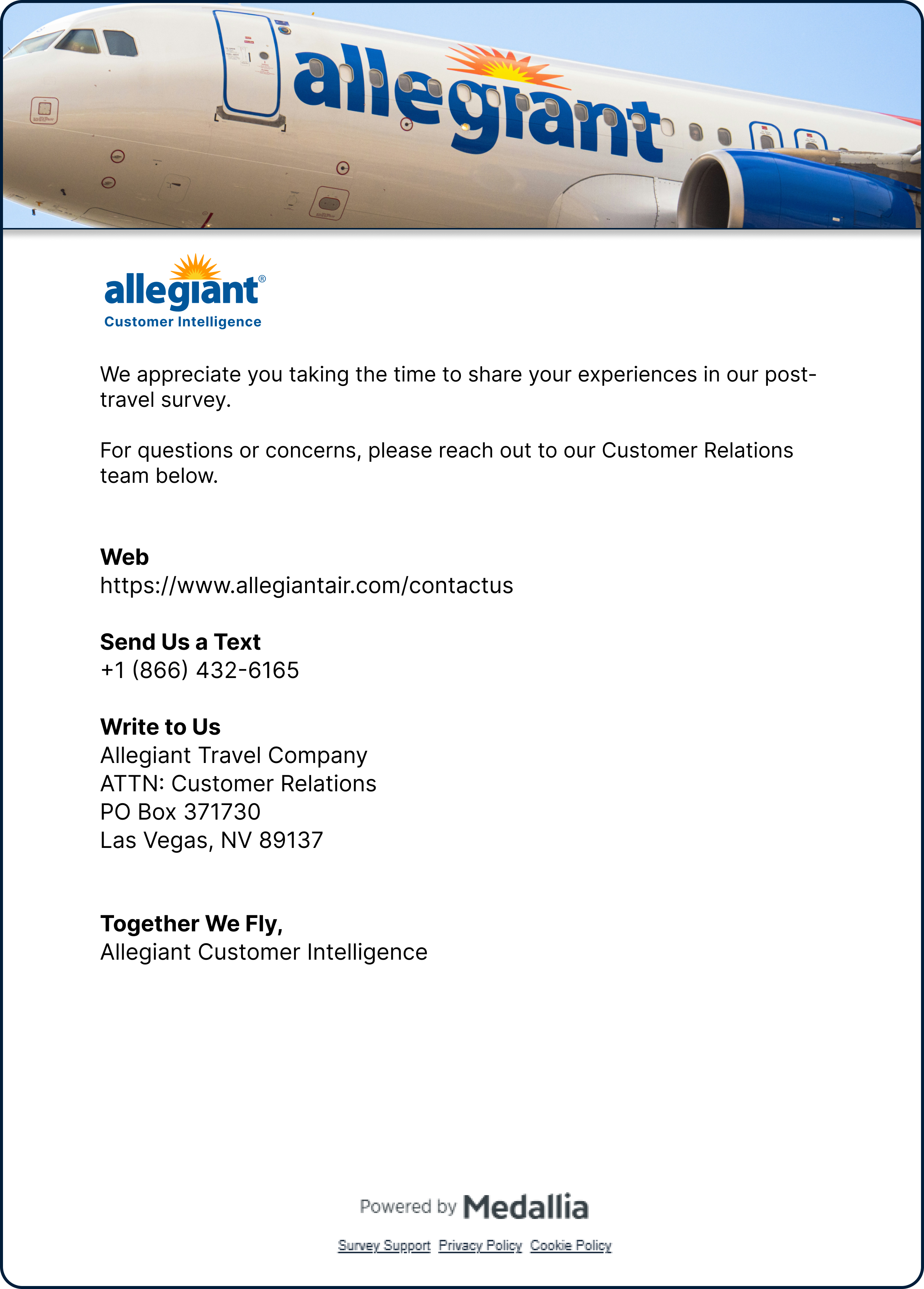
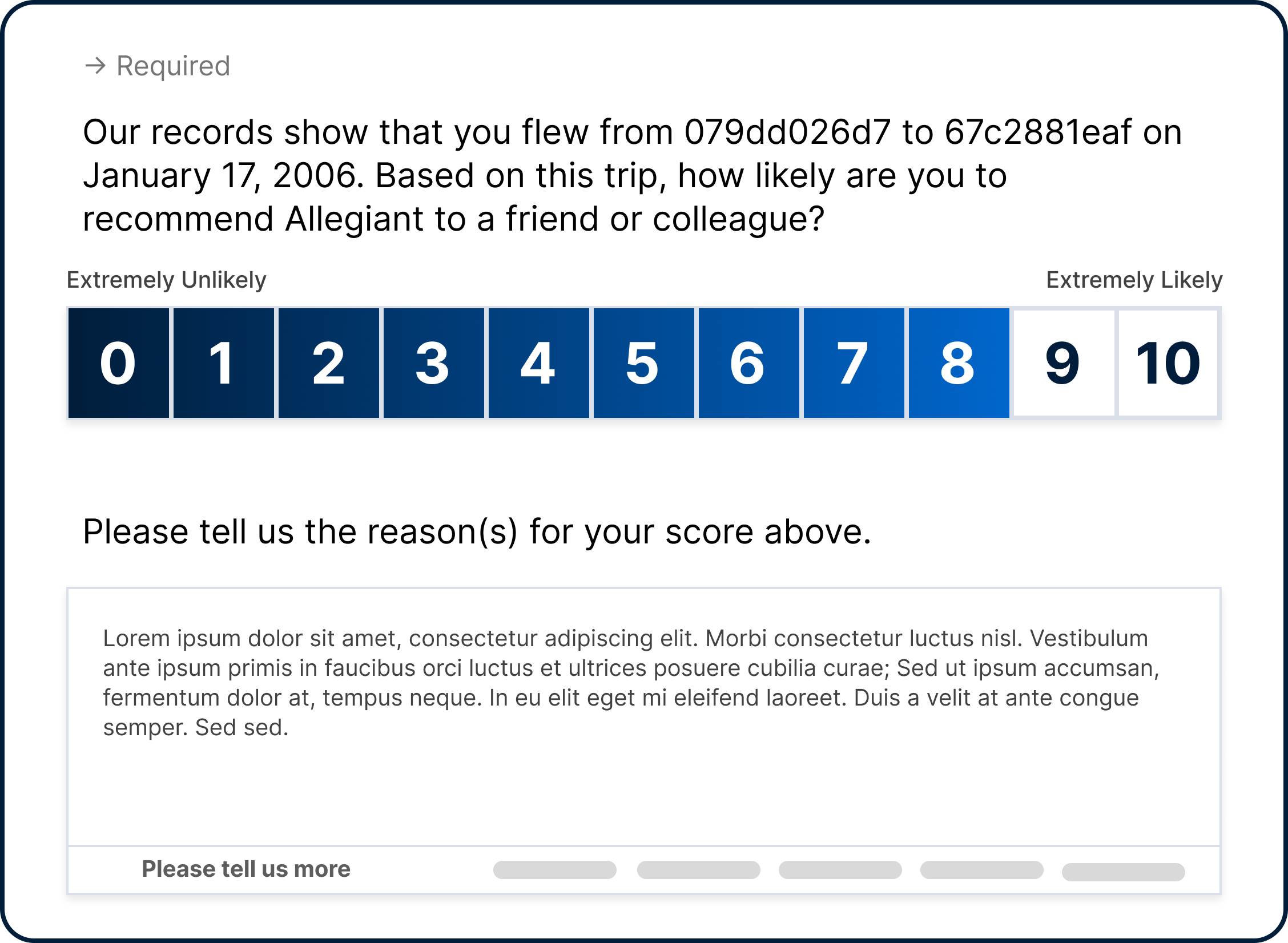
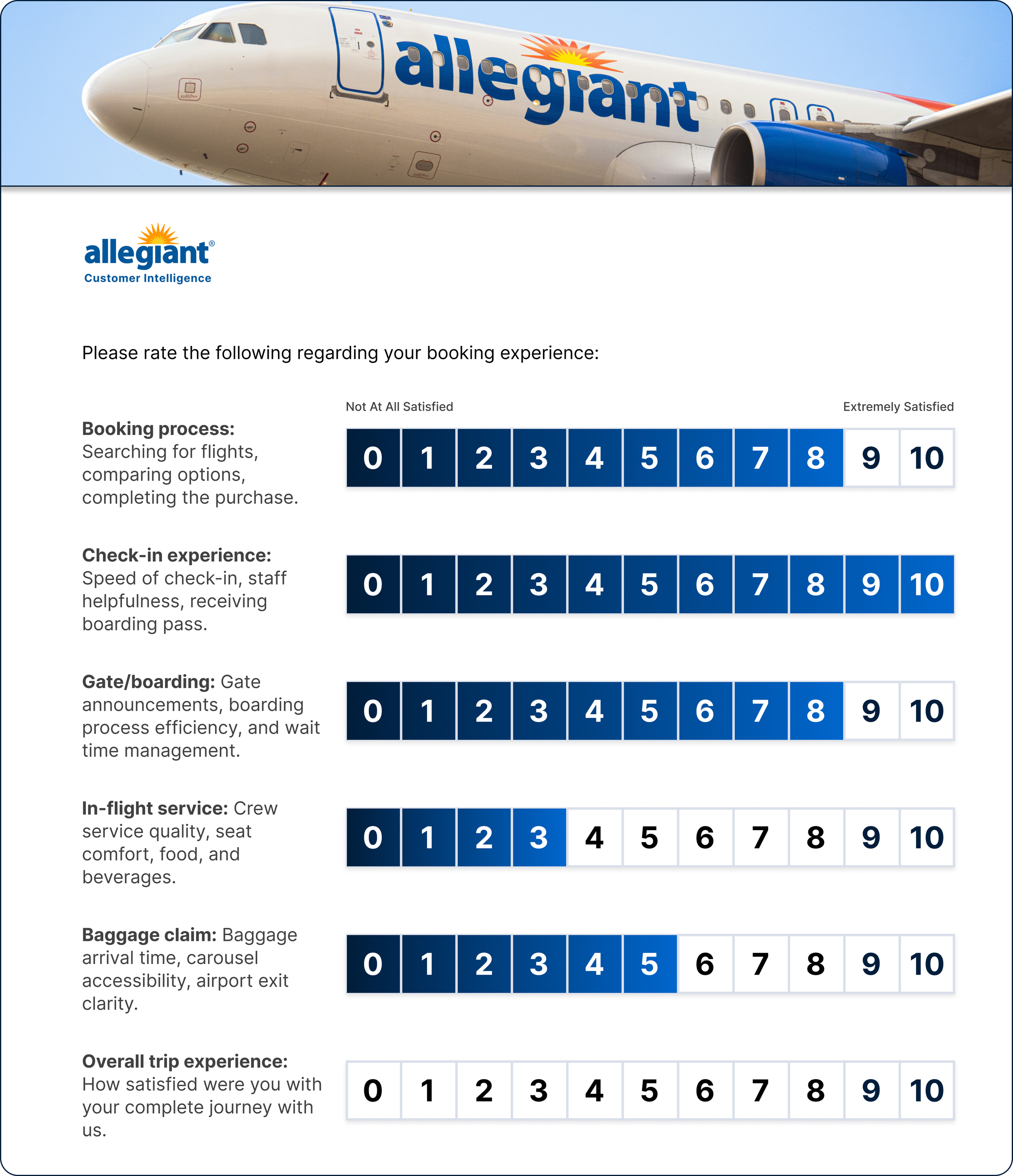
With all the technical considerations near completion, I designed a simple yet effective interface. The build was rendered in Figma and would be implemented with CSS/HTML. The design relies on the modular Medallia Experience Program, incorporating subtle colors and hints of blue and orange to bring the survey together.
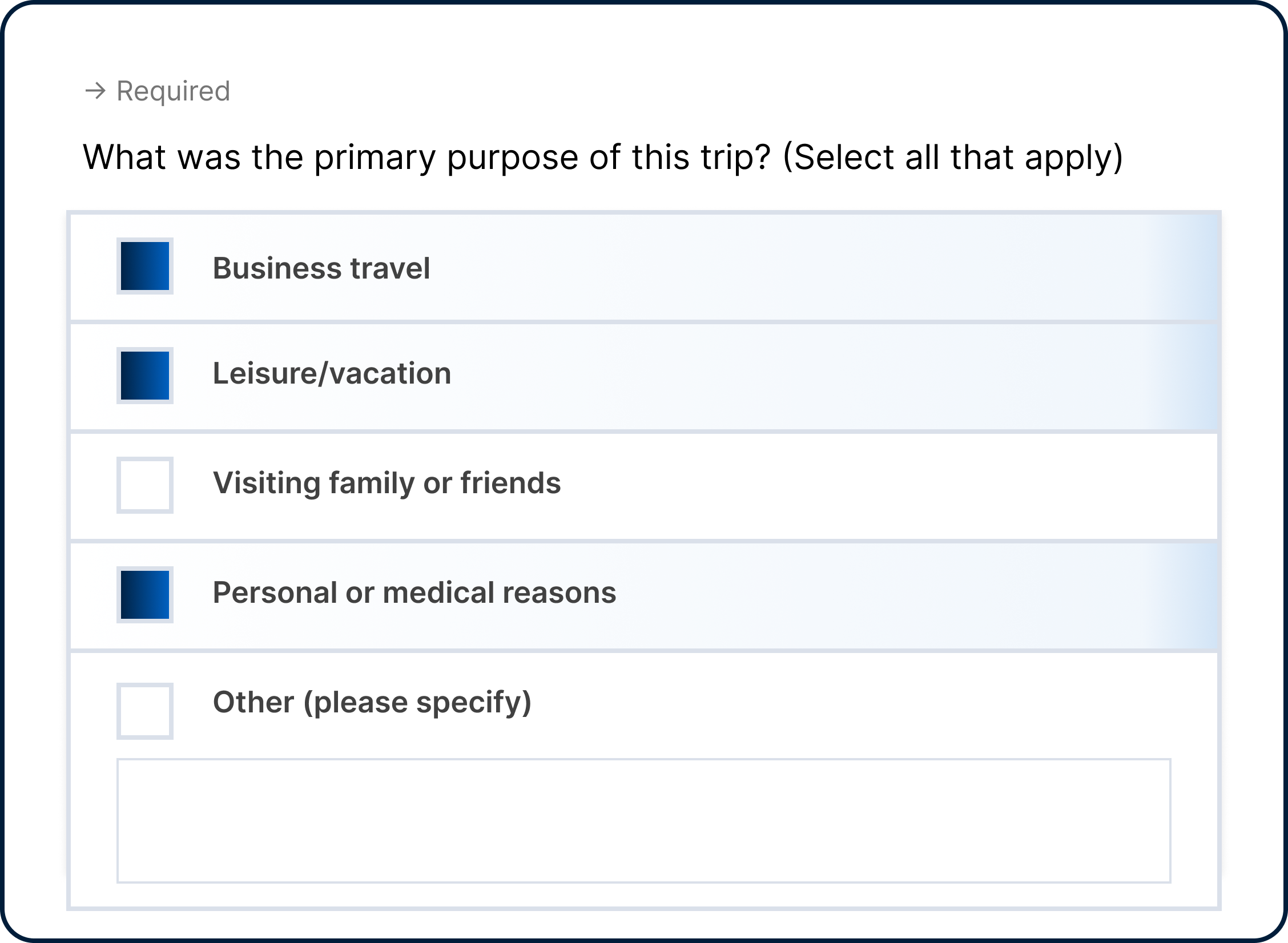
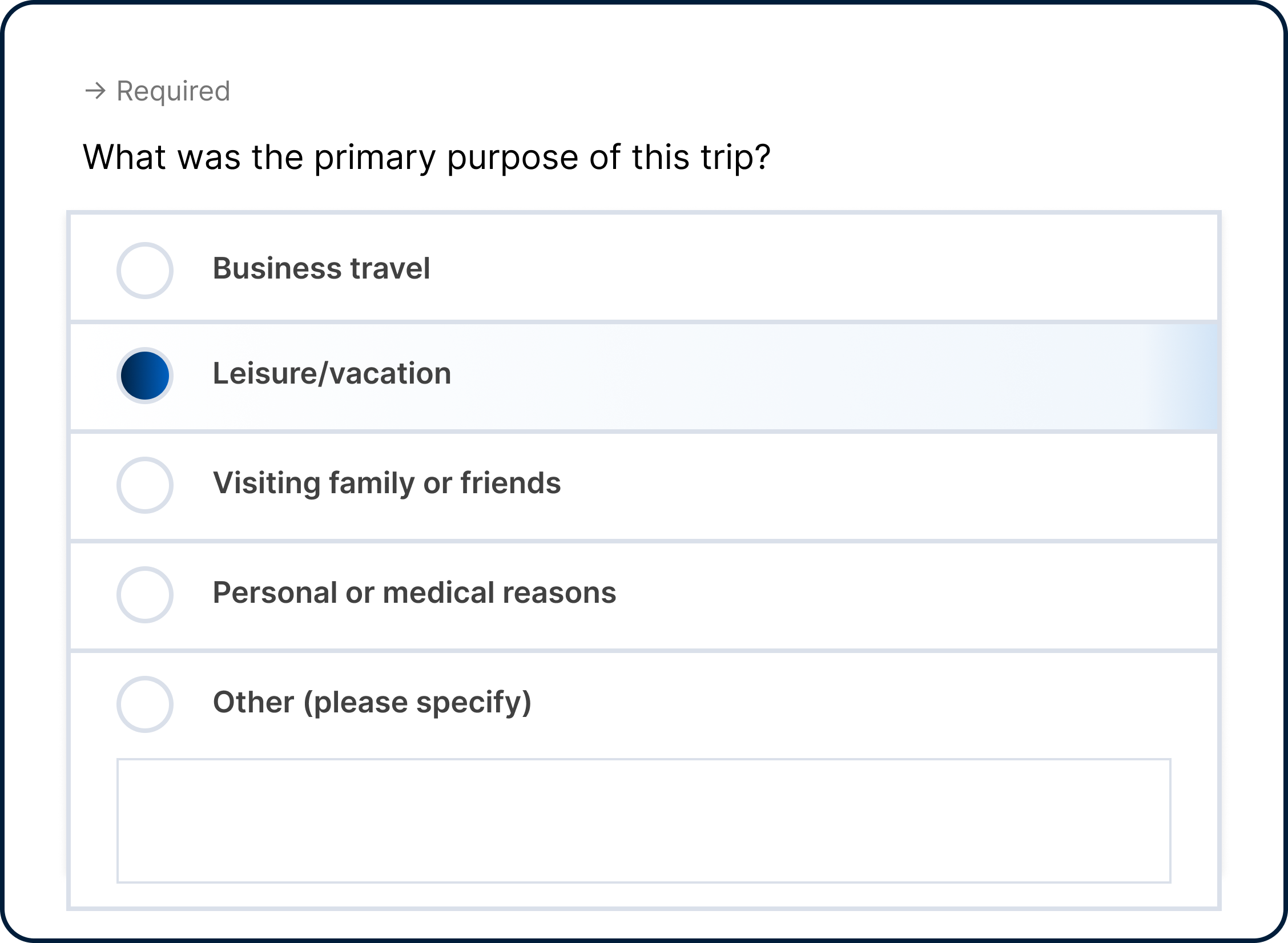
Modularity was the key concern here, as I wanted to preserve the ability to add any questions in the future and remain design consistency. The below gallery showcases various design renders, from question types, accessibility elements, rating systems and a contact page.
I also created a sample email distribution template, further developing brand image to compliment the overall survey redesign.